Wedding Table Layouts Compared: Round, Rectangular and Oval
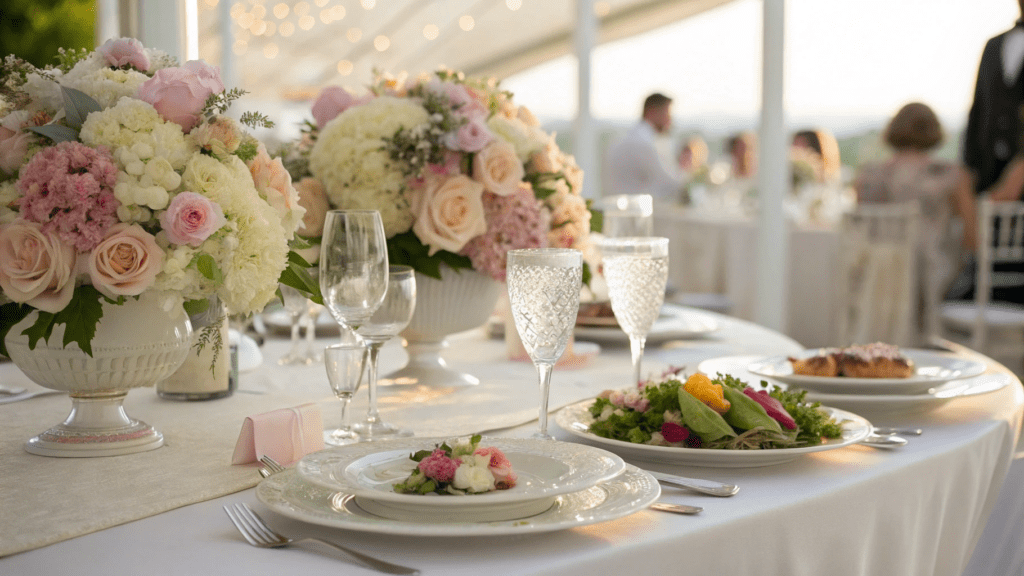
The shape of your tables changes how your reception feels. Some shapes encourage conversation, some make the room feel grand, and some make the best use of a tricky space. This guide compares the most common options so you can choose the one that suits your guests and your venue.
Before you choose: think about the room
Ask your venue for a floor plan and for the list of tables they can supply. Then think about:
- The size and shape of the room
- Space for a dance floor, a cake table, a gift table and a band or DJ
- Walkways wide enough for guests, waiting staff and anyone using a wheelchair or pram
- Where speeches will happen and whether all guests can see
- How many guests you have, and whether you want a more intimate or a more formal feel
As a general guide, leave enough space behind each chair for a guest to stand up and for staff to pass. Ask your venue what spacing they recommend.
Round tables
Round tables are one of the most popular choices for wedding receptions.
Good for:
- Encouraging conversation, since everyone can see everyone else
- Mixing groups of friends and family
- Traditional, formal receptions
- Rooms with a regular square or rectangular shape
Things to consider:
- Larger round tables can make it hard to talk to guests across the table
- Round tables take up more floor space per guest than long tables
- Centrepieces need to be low or slim, so guests can see each other
Many venues have round tables that seat between 6 and 12 guests. Smaller tables feel more intimate, while larger ones fit more people into a room. Ask your venue which size works best.
Rectangular and long tables
Rectangular tables, often arranged as one or more long banquet tables, create a shared, family-style feel.
Good for:
- Relaxed, rustic or garden-style weddings
- Narrow or long rooms and outdoor spaces
- Shared platters and family-style meals
- Creating a dramatic look with a long runner and a line of flowers or candles
Things to consider:
- Guests mostly talk to the people beside and opposite them, so seating needs more thought
- It can be harder for guests in the middle to leave the table
- Very long tables may mean some guests are a long way from the action
Square tables
Square tables are less common at weddings, but they can work well in certain rooms.
Good for:
- Small groups, such as four to eight guests
- Modern or minimal styles
- Pushing together to form longer tables
Things to consider:
- Corners can make it harder to move around the table
- Arrangements are less flexible than round tables when guest numbers change
Oval tables
Oval tables sit between round and rectangular. They offer some of the sociability of a round table with a more elegant shape.
Good for:
- Mid-sized groups where a round table would be too wide
- Rooms that are slightly narrow
- A softer, more formal look than straight rectangular tables
Things to consider:
- Fewer venues carry oval tables, so confirm availability early
- Seating at the ends can feel a little removed from the middle
Head table or sweetheart table
You also need to decide where you will sit.
- Traditional head table: a long table, usually at the front of the room, for the couple and their wedding party. Guests sit on one side only, facing the room.
- Sweetheart table: a small table for just the two of you. It gives you a calm moment together and leaves more room for the wedding party to sit with their partners.
- King’s table or banquet-style: you sit in the middle of a long table with guests on both sides.
- Among guests: you sit at a regular round table with family or friends. This is relaxed and works well in smaller weddings.
Mixing shapes
You do not have to choose only one shape. Some couples combine round tables with a long head table, or use a few long tables alongside round ones. This can help fill an awkward room and add visual interest. Keep the mix simple, with no more than two shapes, so the room does not look cluttered.
How to choose
- Get the floor plan and table options from your venue.
- Decide how formal or relaxed you want the reception to feel.
- Think about your guests: older guests or those with access needs may prefer round tables with easier movement.
- Sketch two or three layouts on paper and count how many guests each can seat.
- Check walkways, the dance floor and service access in each sketch.
- Choose the layout that gives guests the best view and the easiest movement.
A quick comparison
| Shape | Feel | Best for |
|---|---|---|
| Round | Sociable, traditional | Mixed groups, formal receptions |
| Rectangular | Shared, relaxed | Long rooms, family-style meals |
| Square | Modern, compact | Small groups, minimal styles |
| Oval | Elegant, soft | Narrower rooms, mid-sized groups |
Once you have chosen
Share your chosen layout with your venue and caterer, label each table with a number or name, and use it as the base for your seating plan. If you are matching your stationery to your layout, our guide to designing a cohesive stationery set can help with table numbers and signs.
Choose what suits your day
There is no single best shape. The right layout is the one that fits your room, your guests and the atmosphere you want, and that lets everyone enjoy the meal.
Related reading: 10 seating plan problems and how to solve them and wedding table styling ideas for any budget.